Basement Flooding Cleanup in Lincolnton, NC
Water in a finished or unfinished basement gets pumped out, wet carpet, pad and lower drywall come out where readings demand it, and the slab and walls dry with dehumidifiers until they read dry.
(888) 578-4720Have the basement pumped and the slab dried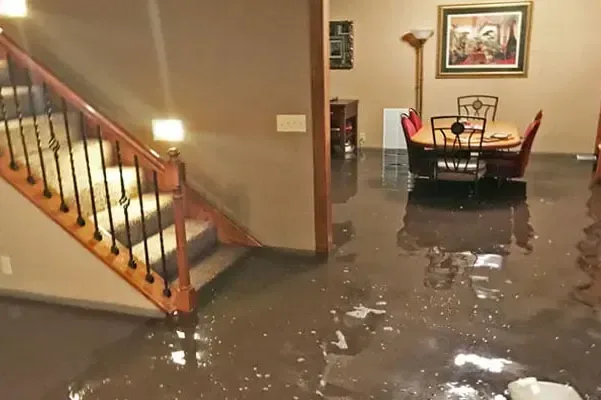
First steps for basement flooding cleanup in Lincolnton
- Stay off wet stairs and cords Keep out if water touches outlets, the furnace or extension cords.
- Check the sump If the pump stopped, see whether the breaker tripped or the float is stuck.
- Lift stored items Move boxes and furniture onto dry shelves or upstairs.
- Photograph the water Capture the depth, the source and every wet item before cleanup starts.
What does basement flooding cleanup cost in Lincolnton, NC?
Basement flooding cleanup usually runs $2,000 to $6,000 for an unfinished space with clean water. Finished basements with wet carpet and drywall land at $6,000 to $15,000, and drain backups or outside water cost more because porous finishes come out.
Unfinished, clean water
- Pump-out and extraction
- Slab and wall drying
- Daily readings
Finished basement
- Carpet and pad removed
- Lower drywall opened
- Cavity drying
Drain or outside water
- Category 3 containment
- Porous finishes removed
- Antimicrobial treatment
Ranges are typical, not a quote: the category of water, the square footage, the material class and how fast drying started move the number most. For a planning figure, try the water damage cost calculator.
How basement flooding cleanup is handled, step by step
- NO1
Find the source
The tech separates seepage, drain and supply water.
- NO2
Pump out
Standing water leaves before any finishes come up.
- NO3
Open up
Wet pad, insulation and lower drywall come out as needed.
- NO4
Dry
Dehumidifiers dry the slab and walls to readings.
A basement takes water from three directions: through the walls after long rain, up through a floor drain or sump pit, and down from a leak upstairs. The source decides the water category, and the category decides what can be dried in place.
Where basement water comes from
- Seepage through block or poured walls when the ground stays saturated
- A sump pump that fails or loses power in a storm
- A floor drain backing up, which counts as Category 3
- A water heater, washer or supply line failing on the same level
Water on the basement floor keeps climbing the drywall and soaking stored boxes. Pumping it out early limits what has to be removed.
(888) 578-4720Book the basement pump-out and slab dryingWhat can stay and what comes out
Concrete, block and treated framing dry in place. Carpet pad, insulation and drywall that wicked water usually come out, along with anything soaked by drain or outside water. Finished basements often need the bottom of the walls opened so the cavities can dry instead of trapping moisture behind paint.
Drying the slab and walls
Concrete gives up water slowly, so basement drying leans on LGR dehumidifiers more than air movers. The drying team logs slab and wall readings daily and pulls equipment only at the dry goal. When the water came in from outside after a storm, the storm and river flood cleanup steps apply as well.
Basement flooding cleanup across Lincolnton and nearby communities
The restoration team covers ZIP 28092 and 28093, from the Court Square blocks and the West Main and South Aspen historic streets out to Boger City, Laboratory, the Bonview Avenue neighborhood and the low ground along Clark Creek and the South Fork.
Nearby coverage reaches Cherryville, Newton, Conover, Hickory, Iron Station, Crouse, Vale, Maiden.
Related water damage services nearby
Basement Flooding Cleanup questions in Lincolnton, NC
Why does a basement flood only in heavy storms?
When the ground around the foundation stays saturated, water pushes through cracks, joints and the slab edge. A sump that cannot keep up or loses power makes it worse.
Can basement carpet be saved after flooding?
If the water was clean and extraction happened quickly, carpet can sometimes be dried. Pad usually comes out. Carpet soaked by a drain backup or outside water is removed.
Is a basement floor drain backup a sewage problem?
Yes. Water from a floor drain counts as Category 3 because it comes from the sewer side, so it gets handled like a sewage backup.
How long does a flooded basement take to dry?
Often four to seven days, longer for thick concrete, block walls or a finished space with several layers. Readings decide when the equipment leaves.
Will insurance pay for basement flooding cleanup?
A burst pipe or failed water heater is often covered. Seepage and outside water usually are not, and sump overflow needs a specific endorsement. Check your own policy.
Water standing in the basement?
The crew pumps it out, pulls wet finishes where readings say, and dries the slab and walls to the goal.
- Lincoln County, NC
- Open every hour, every day