Structural Drying and Dehumidification in Lincolnton, NC
Structural drying dries the framing, subfloor, plaster and concrete, not just the surface. The drying team sizes air movers and LGR dehumidifiers to the class of the loss and pulls equipment only when readings reach the dry goal.
(888) 578-4720Size the drying setup to the wet framing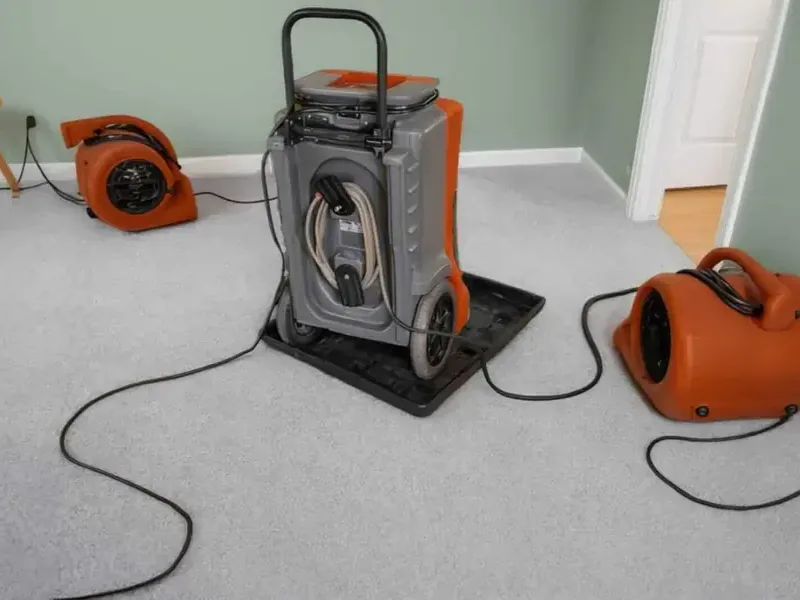
First steps for structural drying and dehumidification in Lincolnton
- Leave the equipment running Air movers and dehumidifiers only work while they run, day and night.
- Keep doors and windows closed Humid outside air works against the dehumidifiers.
- Keep the heat on Normal indoor temperature helps evaporation.
- Stay clear of the cords Keep children and pets away from equipment and cables.
What does structural drying and dehumidification cost in Lincolnton, NC?
Structural drying usually runs $1,200 to $3,500 for one room of clean water, including equipment and daily readings. A floor level or Class 3 drying lands at $3,500 to $9,000, and plaster, hardwood or Class 4 materials cost more.
One room, Class 1 or 2
- Air movers and LGR
- Daily psychrometric logs
- Dry reference readings
Floor level or Class 3
- Larger equipment set
- Cavity drying
- Longer drying run
Class 4 materials
- Desiccant drying
- Hardwood and plaster
- Slab and subfloor drying
Ranges are typical, not a quote: the category of water, the square footage, the material class and how fast drying started move the number most. For a planning figure, try the water damage cost calculator.
How structural drying and dehumidification is handled, step by step
- NO1
Map
Meters and a thermal camera find every wet material.
- NO2
Classify
The category and class set the plan.
- NO3
Dry
Air movers and dehumidifiers run around the clock.
- NO4
Verify
Equipment leaves when readings hit the goal.
Surface dry is not dry. Carpet can feel dry in a day while the pad, the bottom plate and the subfloor stay wet underneath. Structural drying keeps going until the materials themselves read dry.
How a drying plan is built
The plan starts from the moisture map and the class of the loss. Class 1 is a small area with little absorbed water, while Class 4 means dense materials like hardwood, plaster or concrete that hold water deep. The class sets how many air movers and dehumidifiers each room needs and whether desiccant drying comes in.
Turning the fans off early leaves water in the framing and subfloor. Drying to a measured goal is what finishes the job.
(888) 578-4720Get daily readings started on the wet framingWhat gets measured every day
- Temperature and relative humidity in each drying area
- Grains per pound inside, outside and at the dehumidifier outlet
- Moisture readings on drywall, framing and subfloor
- A dry reference from an unaffected material of the same kind
Plaster, hardwood and older houses
Older houses, like those in the historic districts along West Main and South Aspen streets, can have plaster walls and solid wood floors. Those materials dry slowly and need lower, steadier airflow to avoid cracking and cupping, so the drying team adjusts the setup and checks readings closely. The drying-time estimator gives a rough planning figure.
Structural drying and dehumidification across Lincolnton and nearby communities
The restoration team covers ZIP 28092 and 28093, from the Court Square blocks and the West Main and South Aspen historic streets out to Boger City, Laboratory, the Bonview Avenue neighborhood and the low ground along Clark Creek and the South Fork.
Nearby coverage reaches Cherryville, Newton, Conover, Hickory, Iron Station, Crouse, Vale, Maiden.
Related water damage services nearby
Structural Drying and Dehumidification questions in Lincolnton, NC
What is structural drying?
Drying the building materials themselves, not just the surface: framing, subfloor, drywall, plaster and concrete. It uses air movers, dehumidifiers and daily moisture readings to reach a measured dry goal.
Why do structural drying fans run day and night?
Evaporation and dehumidification work continuously. Switching equipment off at night lets moisture settle back into materials and stretches the drying time.
How is dry decided in structural drying?
Each wet material is compared with a dry reference of the same kind elsewhere in the house. Drying ends when readings sit within 2 to 4 points of that reference.
Can plaster walls and hardwood floors be dried?
Often, with slower and steadier drying. Plaster and hardwood hold water deep, so the drying team adjusts airflow to limit cracking and cupping and tracks readings daily.
How much power does drying equipment use?
Air movers and dehumidifiers draw steady power for several days. Some policies reimburse that cost, so keep the power bill for the drying period with the claim records.
Walls and floors still damp?
The drying team sizes air movers and LGR dehumidifiers to the loss and runs them until readings reach the goal.
- Lincoln County, NC
- Open every hour, every day