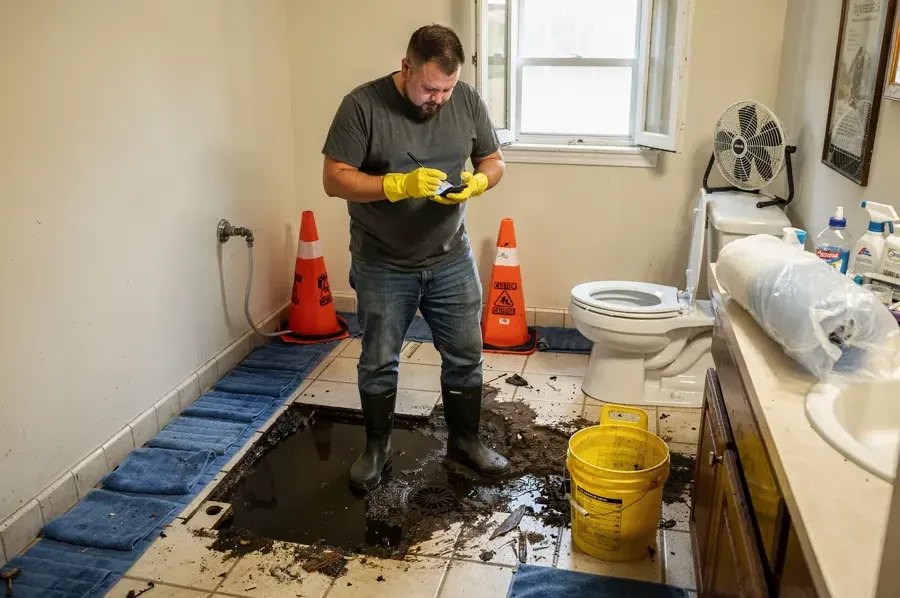
When a toilet gurgles and wastewater rises in a tub, the first question is where the blockage sits. A single clogged drain is a house problem, while several fixtures backing up at once usually points to the sewer. Cherryville runs its own sewer collection system and wastewater treatment plant, which shapes who to contact.
Key takeaways
- One fixture backing up is usually a house drain clog, and a plumber clears it.
- Several fixtures backing up together, or a floor drain filling, points to the sewer and should be reported to the city.
- After hours water and sewer emergencies in Cherryville are reached through the Cherryville Police Department.
- Sewage is Category 3, so carpet, pad and soaked drywall are removed, not dried.
- Storm drains in the road right of way are a separate system from sewers.
How to tell a house drain from a sewer problem
Wastewater from every fixture in a house flows to one main drain and then out to the sewer. Where the stoppage sits decides how many fixtures are affected.
A few quick checks help narrow it down.
- One toilet or sink backing up, with the rest working normally, suggests a clog in that fixture's own drain.
- A tub or shower filling when a toilet is flushed, or a toilet bubbling when a washer drains, suggests a clog in the main house drain.
- Several fixtures backing up together, or a floor drain in the lowest part of the house overflowing, can mean the sewer itself is blocked.
Who to contact in Cherryville
The city runs its own sewer collection system and its own wastewater treatment plant, which treats domestic, industrial and commercial wastewater. That means a problem in the public part of the system is the city's to look at.
The city's public information says after hours water and sewer emergencies are reached through the Cherryville Police Department. A single clogged fixture inside the house is a plumbing job instead.
Who owns the pipe between the house and the main can differ from one property to the next, so a plumber or the city can confirm it for a specific home.
Why a sewage backup is treated as Category 3
Wastewater carries bacteria, viruses and other organisms. Restoration standards place it in Category 3, the most contaminated class, so it is handled with protective gear and set cleanup steps.
The household should stay out of the affected rooms until the cleanup is done.
- Do not use sinks, showers or toilets while the backup is active, because that sends more waste into the house.
- Keep children and pets out of the area.
- Do not run fans or a household vacuum through the contaminated area.
- Take photos before anything is moved.
What cleanup removes and what it treats
The crew begins with water extraction to remove the liquid from the floor. After that, the work splits by material.
Porous materials
Carpet, pad, soaked insulation and low sections of drywall that contacted the wastewater are cut out and bagged. These materials soak up contamination and cannot be made safe by drying alone.
Hard surfaces and framing
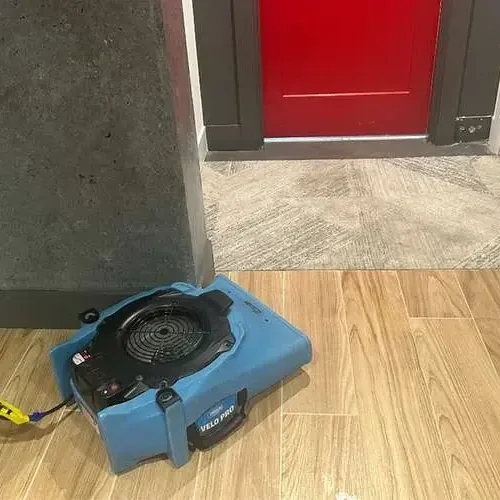
Tile, sealed concrete, vinyl and framing are cleaned and treated, then dried. The team checks wall bases and the subfloor with a moisture meter before anything is closed up.
A full description of this work sits under sewage backup cleanup.
Early warning signs of a sewer problem
A backup rarely starts with a flood. It usually gives hints first, and catching them early can keep the damage small.
- Gurgling from a drain when another fixture is used.
- Slow drains in more than one room at the same time.
- A sewage smell near a floor drain or the lowest bathroom.
- Water rising in a tub or shower after a toilet is flushed or the washer runs.
- Bubbling in a toilet bowl without a clear cause.
What a plumber and the restoration team each do
These are two separate jobs, and the household usually needs both. The plumber finds and clears the stoppage, while the restoration team deals with the water already in the house.
Each works best with the other's findings, so a short note on what each person found is worth keeping. Every service is listed on the water damage services pages.
- The plumber clears the blockage and can run a camera through the drain to see the cause.
- The restoration team removes the contaminated water, then cleans and dries the affected rooms.
- The city looks at the public sewer if the problem is outside the property.
Protecting the rest of the house during cleanup
Contamination travels on boots, towels and air. The crew limits that by sealing doorways with plastic and keeping the work area under controlled airflow.
A heating or cooling system that pulls air from the affected area is usually turned off until the cleanup is done. That keeps odors and particles from reaching clean rooms.
Storm drains are a separate system
Rain water that floods a yard or a driveway is a different matter. The city's Street Division maintains streets and the storm drains in the road right of way, and those drains are not part of the sewer.
A backed up storm drain can put storm water against a house, but that is a storm problem, not a sewage backup. The two are cleaned differently, so it helps to tell the restoration team which one it was.
When the backup happens during a storm
Heavy rain can strain any system that carries water, and a backup during a storm can leave a household unsure what it is dealing with. The two kinds of water can end up on the same floor.
Storm water and sewage are cleaned differently, so the restoration team asks what came first and where the water entered. Floor drains, toilets and the lowest tub are the usual clues.
If the water came up through a drain, the cleanup is treated as Category 3 from the start, even if rain was falling at the same time.
Records for the plumber, the city and the insurer
A short log saves time later. It should show when the backup began, which fixtures were involved and who was contacted.
Many policies treat a sewer backup separately from other water damage, so the wording of the policy matters. An agent can say whether an added coverage applies.
- Dated photos of the affected rooms.
- The plumber's findings and invoice.
- A list of damaged belongings.
- Notes on each contact with the city.
Questions
Can a sewage backup be cleaned with household products?
It is not advised. Category 3 water carries pathogens, and porous materials that soaked it up need to be removed by trained crews.
Does a backup always come from the city sewer?
No. A clog in the house's own drain is more common, and a plumber can tell where the stoppage sits.
Is a sewage backup covered by insurance?
Coverage varies. Many policies need an added coverage for sewer backup, so the policy wording or the agent is the place to check.
How long before a room can be used again?
Only after the contaminated materials are removed, the surfaces are treated and the readings show the structure is dry.
Who should be told first when several fixtures back up?
Stop using water in the house, then report the problem to the city if the whole house is affected and call a plumber if only one fixture is. After hours, the city's public information points to the Cherryville Police Department.