Lincolnton sits in the Piedmont, where the soil is the Cecil series: thin topsoil over a heavy red clay subsoil. That clay is North Carolina's state soil, and it decides a lot about where rain goes after a storm. For a house with a crawl space or a low room, the ground itself is part of the water problem.
Key takeaways
- Heavy red clay under thin topsoil takes in rain slowly, so water tends to sit and run along the surface toward foundations and low spots.
- Water in a crawl space or low room is pumped out first, then wet insulation, barrier and finishes are checked and removed where needed.
- Joists and subfloor are dried with readings, not guesses, before anything is closed back up.
- Gutters, downspouts and the slope of the ground are the cheapest rain controls a house has.
- No local pattern of crawl spaces or basements is assumed here: the steps apply to any house with a space below the floor.
Why red clay holds rain near the foundation
Topsoil here is thin, and under it lies a heavy red clay. Clay particles are tiny and pack tightly, so water moves down through them slowly.
In a long soaking rain, the top layer fills up and the extra water has nowhere to go. It spreads sideways across the surface or pools against whatever blocks it, including a foundation wall.
The area sits at an elevation of about 883 feet, with the South Fork Catawba River on one side of the city and Clark Creek joining it on the other. Rain that cannot soak in heads for those low places.
How rain water gets under or into a house
Water does not need a flood to cause trouble. A few hours of steady rain can saturate the ground along a foundation and push water through small gaps.
Houses with no crawl space or low room still see rain at windows, doors and walls, and the same ground conditions apply. The steps below fit any home with a space below the floor.
Crawl spaces
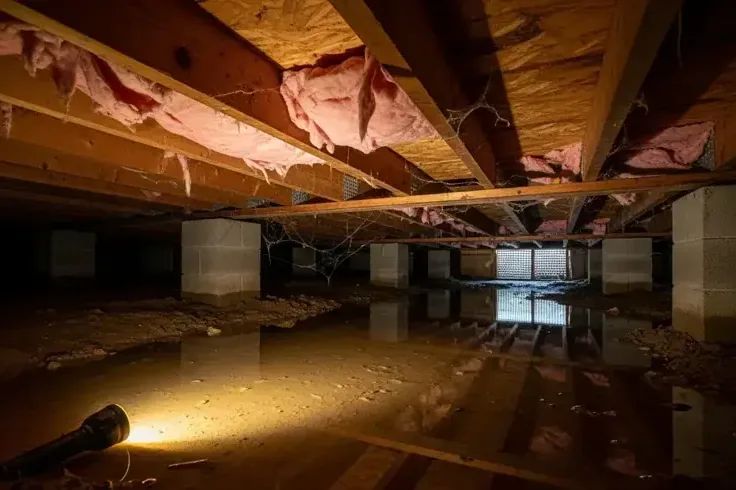
If a house has a crawl space, water can enter through vents, seams in the foundation wall and low spots in the dirt floor. It can also arrive from a downspout that empties beside the wall.
A wet crawl space soaks insulation, sags the vapor barrier and keeps the joists above it damp.
- Puddles or dark, soft soil on the crawl space floor.
- Insulation hanging down or lying wet on the ground.
- A musty smell inside the house after rain, or floors that feel soft over one area.
Low rooms and below grade walls
A finished or unfinished room set into a slope can take on water through the floor joint, window wells and cracks in the wall. Clay soil that stays saturated presses on the wall for days after the rain stops.
What a crawl space pump out involves
The first job is to remove the standing water with a pump, then pull what cannot be dried. Wet fiberglass insulation sags and holds water against the subfloor, so it is usually removed instead of left to dry.
The barrier over the soil is checked next. A torn or soaked barrier is lifted and replaced after the space has dried.
The crew then dries the joists and subfloor from below and above. The full process for this type of job is described under crawl space water removal.
- Water is pumped to a point away from the foundation.
- Wet insulation and damaged barrier are bagged and removed.
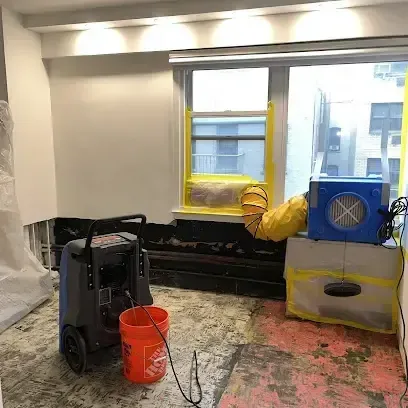
- Fans and dehumidifiers dry the joists, sill plates and subfloor.
- Readings confirm the framing is dry before the space is closed.
Pumping a low room without stressing the walls
When a low room fills with water, the soil outside is often just as wet as the water inside. If the room is emptied too quickly, that wet soil can push against the walls.
The crew lowers the level in steps and checks it between rounds. After that, wet carpet, pad and bottom sections of drywall come out, and the slab and wall bases are dried.
The related work is covered under basement flooding cleanup.
Drying and what usually gets replaced
Once the water is gone, wood still holds moisture. Readings from a moisture meter set how long the fans and dehumidifiers stay in place, and the crew compares wet framing against a dry piece of the same wood.
Mold can begin on damp wood in 24 to 48 hours, which is why the drying plan is set up quickly. Quick, steady drying often saves the framing and replaces only the soft materials.
Plain water extraction comes before any of this, because every hour of standing water pushes moisture deeper into wood and drywall.
The first day when water is under the floor
A homeowner who finds water in a crawl space or low room can take a few safe steps while the crew gets ready.
- Turn off power to any area where water touches outlets, ducts or equipment.
- Stay out of a crawl space that has standing water near wiring.
- Photograph the water level, the insulation and any spot where water is coming in.
- Move stored items out of low rooms and up onto shelves.
- Shut off the water supply if a pipe is leaking as well.
Is rain water in a crawl space clean?
Rain that seeps through soil is not drinking water. It collects dirt, fertilizer and anything lying on the ground, which makes it gray water at best.
If the water arrived through a sewer backup or mixed with one, it is Category 3 and the cleanup changes. The crew checks the source and the smell before deciding how much has to come out.
How storm water is classed is covered under storm and river flood cleanup.
Insurance and records for rain driven water
Seepage and surface water are often excluded from standard homeowners policies, while a sudden pipe failure may not be. The cause of the water decides which policy responds, so photos of the source and the date matter.
Moisture readings, equipment logs and invoices from the drying work belong in the same folder as the photos.
Keeping rain away from the house
Because clay sheds water instead of absorbing it, where the water goes matters more than usual. A few simple habits move rain away from the walls.
- Clean gutters so they do not overflow beside the foundation.
- Extend downspouts so water lands well beyond the wall.
- Keep the ground sloping away from the house, not toward it.
- Check crawl space vents and window wells for debris before storm season.
Questions
Why does water collect around houses on clay soil?
Clay takes in water slowly, so heavy rain spreads along the surface and settles against low spots and foundation walls instead of soaking down.
Is water in a crawl space an emergency?
It should be treated as urgent. Standing water soaks insulation and wood above it, and the damage deepens the longer it sits.
Does wet insulation have to be removed?
Fiberglass insulation that has soaked up water usually sags and stays wet, so it is generally removed and replaced after the space dries.
How do I know the crawl space is dry again?
Moisture readings on the joists and subfloor, compared with a dry reference, show when drying is finished. Touch alone is not reliable.