Sewage Backup Cleanup in Hickory, NC
The City runs three wastewater plants, including the Northeast Wastewater Treatment Facility and the Henry Fork Wastewater Treatment Facility, but a backup inside a building is a cleanup and safety problem. The team removes it, sanitizes and dries.
(888) 578-4720Get the sewage cleaned up safely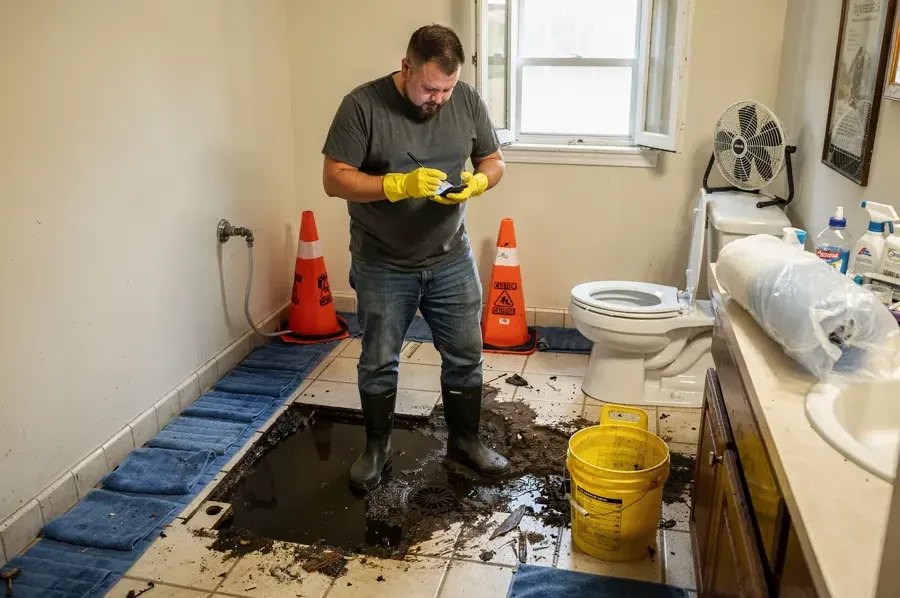
First steps for sewage backup cleanup in Hickory
- Assess and isolate The team sets up containment, checks the source and puts on protective gear.
- Pump and remove Sewage is pumped out, and soaked carpet, padding and drywall are cut out and bagged.
- Wash and disinfect Hard surfaces are cleaned and treated with a disinfectant.
- Dry and verify Dehumidifiers and air movers run until the readings reach dry targets.
What does sewage backup cleanup cost in Hickory, NC?
Sewage work always costs more than clean water, because materials are removed and disinfected. A bathroom or small area commonly costs $2,500 to $7,000, a basement or several rooms run higher, and a whole level can reach $40,000.
One bathroom or small area
- Sewage pumped out
- Materials discarded
- Disinfected and dried
A basement or a few rooms
- Carpet and drywall removed
- Sanitizing
- Extended drying
A whole level or more
- Full strip out
- Contents handling
- Monitoring through completion
Ranges are typical, not a quote: the category of water, the square footage, the material class and how fast drying started move the number most. For a planning figure, try the water damage cost calculator.
How sewage backup cleanup is handled, step by step
- NO1
Isolate
The area is sealed and the source is checked.
- NO2
Remove
Sewage and porous materials are taken out.
- NO3
Disinfect
Hard surfaces are washed and treated.
- NO4
Dry
Equipment runs until readings are normal.
Sewage backup is classed as the most contaminated water category, because it carries bacteria and viruses. Nobody should wade through it without protection, and nothing that soaked it up is dried and kept.
Where it comes from
A backup usually rises through the lowest drain: a floor drain, a basement toilet or a tub. Causes range from a blockage in the pipe serving the building to heavy rain overwhelming a drain. Responsibility for the pipe is a separate question, so the cleanup sticks to safety and removal.
Sewage in the house? Keep everyone out and describe the area to the response team, which brings protective gear and a removal plan.
(888) 578-4720Call about the sewageWhat the cleanup involves
The area is sealed off, and the crew wears gloves, boots and respirators. Standing sewage is pumped out, then carpet, padding, drywall and insulation that touched it are cut out and bagged. Hard surfaces are washed and disinfected, and the space is dried with dehumidifiers and air movers.
Staying safe at home
Keep children, pets and anyone with a weak immune system out of the area, and do not run the dishwasher or washer if drains are slow. Shut off power to a flooded room. See storm and river flood cleanup and basement flooding cleanup for related work.
Sewage backup cleanup across Hickory and nearby communities
Sewage cleanup covers houses, apartments and commercial buildings across the city, including the areas around Conover Boulevard and Interstate 40, the communities of Bethlehem, Mountain View and St. Stephens, and basements, bathrooms and kitchens alike.
The same service nearby: sewage backup cleanup in Lincolnton, Conover, Newton.
Related water damage services in Hickory
Sewage Backup Cleanup questions in Hickory, NC
Is sewage backup dangerous?
Yes. Sewage carries bacteria, viruses and parasites that cause illness through contact or by breathing the fumes. That is why the work needs gloves, respirators and containment, and why the area stays off limits.
Can a sewage backup be cleaned without professional help?
A tiny spill on a hard floor can be cleaned with protection and a disinfectant. Anything that reached carpet, drywall or a large area needs removal and drying by a team with the proper gear.
What happens to carpet and drywall?
They are removed. Porous materials absorb contaminated water and cannot be made safe by cleaning, so carpet, padding, drywall and insulation that touched sewage are bagged and discarded.
Who fixes the blocked pipe?
A plumber clears and repairs the pipe. The City Water Distribution Division maintains sewer pipes in its own system, but the cleanup inside a building is handled by the owner and a restoration team.
Will insurance cover a sewage backup?
Many policies exclude it unless a sewer backup endorsement was added, and some cover a sudden backup only up to a limit. The policy and the adjuster decide, and photos taken before cleanup help.
How long does the area need to dry?
After the removal and disinfecting, drying usually takes several days. Readings decide when equipment leaves, and the space is checked again before rebuilding starts.
Contaminated water, safely removed
Sewage keeps spreading bacteria into porous materials until it is removed. The mitigation team contains it and cleans up.
- Lincoln County, NC
- Open every hour, every day