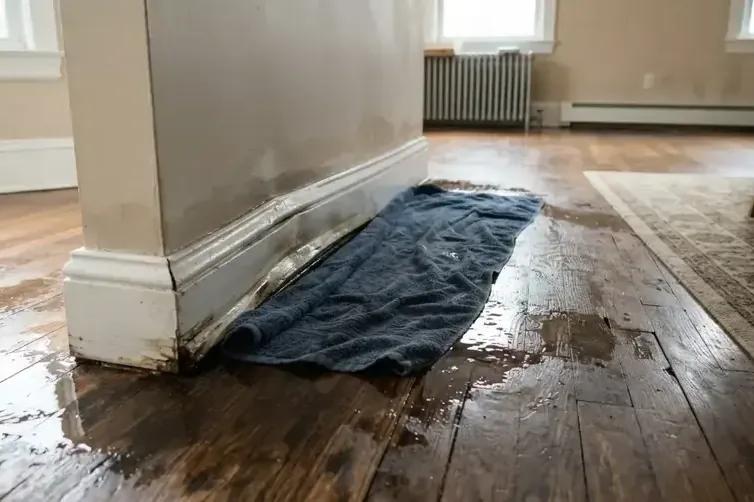
In Conover, the city is responsible for water mains and service connections up to the meter box or vault, and for the meter parts and cut-offs inside the box. Water service connections beyond the meter are the customer's responsibility. A split pipe in a house is therefore an owner side repair, and the cleanup is the owner's to arrange.
Key takeaways
- The city looks after water mains and service connections up to the meter box, plus the meter parts and cut-offs inside the box.
- Pipes beyond the meter belong to the customer, so a split pipe in the house is an owner side repair.
- After hours water or sewer emergencies in Conover go through Catawba County Communications.
- Shutting off the home's own valve and removing standing water early limits what walls and floors soak up.
- Crews open only the wall and floor sections that readings show are wet.
Where the city's side ends
The boundary between public and private pipe in Conover sits at the meter box. Everything up to it is the city's, and everything past it is the customer's.
That division decides who repairs the pipe, but it does not change what has to happen to the water already inside the house.
- City side: water mains, service connections up to the meter box or vault, and the meter parts and cut-offs inside the box.
- Owner side: water service connections beyond the meter, the pipes inside the house and the fixtures they feed.
- Either way, wet floors, walls and ceilings are an owner side cleanup.
Shutting off the water the right way
The cut-offs inside the meter box are the city's equipment, so the home's own shutoff valve is the first one to use. Most homes have a main valve near where the supply pipe enters the house.
Knowing where that valve is before a pipe splits saves time when it counts. If the valve will not turn or the water cannot be stopped, the city's public information says after hours water or sewer emergencies go through Catawba County Communications.
- Close the home's main valve and open a low faucet to drain the pipes.
- Switch off power at the panel if water reached outlets or a ceiling light.
- Photograph the pipe, the water and the damage before moving anything.
Signs of a split pipe inside a wall or ceiling
Not every burst pipe sprays water. Many leak quietly inside a cavity, and the first sign shows up in a nearby room.
- A ceiling stain that grows, or drywall that bulges or sags.
- A baseboard that swells or paint that bubbles low on a wall.
- Water noises when no fixture is running.
- A water bill that jumps without a change in use.
- A damp, musty smell in a closet or cabinet.
Extraction and drying after the pipe splits
Once the water is off, the work shifts to the water that escaped. The aim is to take out as much as possible before it settles into materials.
Removing standing water
Pumps and extractors clear the floor first, which keeps water from wicking up walls and into cabinets. Water extraction comes before any tearing out.
Opening only what is wet
Moisture meters and an infrared camera show where the water traveled. Walls and ceilings are opened where the readings stay high, and dry sections are left alone.
- Baseboards and the bottom of the drywall are checked first.
- Insulation that soaked water is removed.
- Flooring is lifted only where moisture sits beneath it.
Drying
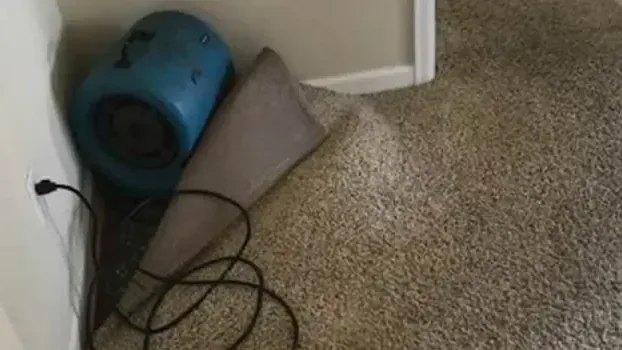
Fans and dehumidifiers stay in place for as long as the readings require. The full process is described under burst pipe water damage.
Why supply pipes split
A pipe rarely splits for one reason alone. Age, pressure and temperature work together, and the weak point finally gives way.
- Corrosion that thins the pipe wall from the inside.
- Sudden pressure spikes when a valve or appliance shuts quickly.
- A freeze that expands the water and cracks the pipe, with the leak starting at the thaw.
- Loose or worn fittings and connectors at fixtures.
- Movement from settling or from work done near the pipe.
How much water a split pipe can release
A small supply pipe under household pressure can release a surprising amount of water in a short time. Unlike a slow drip, a split keeps pushing water into walls, floors and the room below until the supply is closed.
That is why the shutoff comes before anything else. Every extra minute adds to what the drywall, cabinets and flooring have to be cleared of.
Protecting belongings while the crew works
Furniture and personal items can often be saved if they are moved early. The crew sorts them by how wet they are and what they are made of.
- Lift furniture off wet carpet and place foil or plastic under the legs.
- Move books, papers, photographs and electronics to a dry room.
- Pull rugs and area carpets out of the water so dyes do not stain the floor.
- Leave heavy items for the crew, which has the tools to move them safely.
Who does what after the pipe splits
Because the break is on the owner side, three people usually become involved. Each has a separate task, and each needs the same facts.
Receipts for the plumber, the equipment and any emergency purchases belong with the photos, since the insurer may ask for each of them.
- A plumber repairs or replaces the split pipe.
- The restoration team extracts the water and dries the structure.
- The insurer decides what is covered, based on the photos, the cause and the repair records.
When the water reaches the floor below
In a two story house, a split pipe upstairs sends water through the subfloor into the ceiling underneath. The damage then shows in two rooms, and both need drying.
The crew checks the room below even when the stain looks small. Water that collects in a ceiling cavity can soak insulation and drywall long before it drips.
Records for an owner side loss
Because the split is on the owner side, the paperwork is the owner's too. A simple file kept from the first hour saves effort later.
- Photos of the split pipe, the wet areas and any damaged belongings.
- The plumber's invoice and, if possible, the failed section of pipe.
- Moisture logs and drying notes from the restoration team.
- Receipts for equipment, cleaning supplies and any temporary housing.
After the repair: final checks
When the pipe is fixed and the readings are dry, repairs can start. New drywall, paint and flooring go in last, once the framing matches a dry reference.
A second round of readings a few days later catches any hidden pocket that stayed damp. Water heater leaks and other tank failures follow the same path under water heater leak cleanup.
Questions
Who repairs a pipe between the meter and the house?
The customer. The city's published responsibilities end at the meter box, so service connections beyond the meter are the owner's.
Can the restoration team start before the plumber finishes?
Often yes. Once the water is shut off, extraction can begin while the plumber works, as long as it is safe.
How can a hidden leak be confirmed?
Moisture readings and an infrared camera show damp areas inside walls, and a plumber can then trace the pipe.
Does insurance cover a burst pipe?
Many policies cover sudden water damage from a burst pipe, though the pipe repair itself may be treated differently. The policy wording or the agent can confirm.
What if the meter box itself is leaking?
The meter parts and cut-offs inside the box are the city's equipment, so a leak there is reported to the city and not repaired by the owner.
Should the failed pipe section be kept?
Yes. The plumber and the insurer may want to see where and how it failed, and a photo alone does not always show the cause.