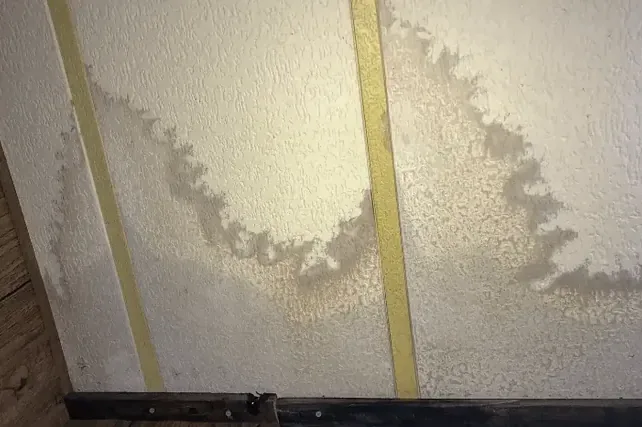
In ZIP code 28601, which covers a wider area than the city itself, 24.77 percent of the 23,838 housing units are multi-family and 31.64 percent of occupied housing is rented, per American Community Survey estimates for 2020 to 2024. In a building with units stacked on each other, a ceiling stain often starts with a fixture or appliance upstairs. The cleanup involves more than one household.
Key takeaways
- ZIP code 28601 has 24.77 percent multi-family units and 31.64 percent renters, so many ceilings have a neighbor above them.
- The first steps are to protect belongings, switch off power under a wet ceiling and tell the manager or landlord.
- A ceiling holding trapped water is released in a controlled way, then the damaged section is opened.
- Wall cavities, insulation and the floor below a stain are checked because water travels.
- Tenants and owners both keep photos and notes, since each may file a claim.
Why ceiling stains often start upstairs
In ZIP code 28601, 69.76 percent of housing units are single-family, 24.77 percent are multi-family and 5.47 percent are other structure types. These figures cover the whole ZIP code, which reaches past the city into parts of four counties, so they describe the area and not the city alone.
Even so, they point to many buildings where one unit sits above another. In that kind of building, a bathroom, kitchen or laundry closet upstairs is the usual place a ceiling leak begins.
The first steps when water comes through a ceiling
Water that reaches a ceiling has already traveled. It is on its way down, and it will follow wires, pipes and light fixtures.
- Move furniture, rugs and electronics out of the drip zone.
- Turn off power to the room if the ceiling is wet near a light or fan.
- Place a bucket or tub under a drip and lay towels around it.
- Photograph the stain, the drip and anything damaged.
- Tell the manager or landlord right away, and let the neighbor above know.
Who to tell in a building with several units
A leak crosses from one unit into another, so the first messages matter. The manager can shut off water to the unit above and send a plumber, and the neighbor can stop using the fixture at fault.
Renters usually carry their own policy for belongings, and the building owner carries one for the structure. Each may need a separate claim.
- The manager or landlord, who can shut off the supply to the unit above.
- The neighbor upstairs, who may not know a hose or fixture is leaking.
- The renter's insurer for damaged belongings.
- The building owner's insurer for the ceiling and walls.
How the drying team handles the ceiling, walls and floor
Once the source is stopped, the focus turns to the water that has already soaked into the structure.
Opening the ceiling
A ceiling bulging with trapped water is a hazard. The crew releases it in a controlled way into a container, then removes the saturated drywall or tiles.
Stains and light sagging can sometimes be dried in place, and the readings decide which way to go.
Insulation and wall cavities
Water often runs down inside the wall below the stain. Insulation that soaked it up is removed, and the cavity is dried before it is closed again.
Floors and belongings below
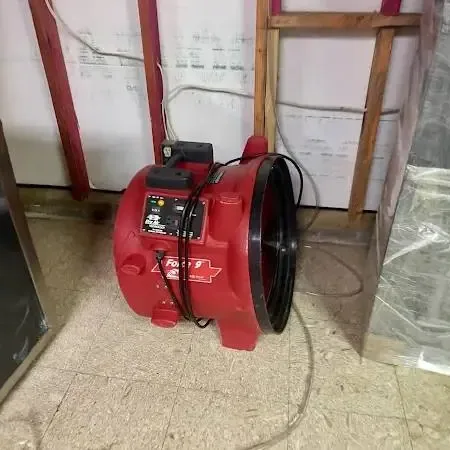
Carpet and pad under the leak are checked and often pulled. Dehumidifiers and fans then dry the space, and the team can start with water extraction if water pooled on the floor.
Common sources of leaks from the unit above
Most upstairs leaks come from a short list of causes. Naming the source early helps the plumber, the manager and the insurer.
- Washing machine hoses and drains.
- Dishwasher connections and ice maker supplies.
- Toilet supply pipes and seals.
- Tub or shower overflows and failing caulk.
- Water heaters in closets.
Telling a roof leak from a plumbing leak
A stain on a top floor ceiling may come from the roof and not from a neighbor. The pattern of when it grows usually gives it away.
- A stain that grows only during or after rain points to the roof or an exterior wall.
- A stain that grows on dry days points to a supply pipe, a drain or an appliance.
- A stain below a bathroom or kitchen on an upper floor points to that fixture.
- A stain that feels warm to the touch may mean a hot water pipe is involved.
Owner, renter or condo: who pays for what
Responsibility depends on the lease or the ownership papers. A renter usually insures belongings, and the landlord insures the building.
An owner of a condo may also have an association that insures common parts of the building. The documents spell out where one policy ends and another begins, and the insurers sort out fault between them.
Living in the unit while it dries
Drying equipment makes noise and takes up floor space, and it often runs for several days. Most households stay in the unit while the work goes on.
The crew sets up equipment to leave a walkway and a clear path to the kitchen and bathroom. If a room becomes unusable, a written note to the manager about a temporary change is worth sending.
What the manager and plumber will want to know
Clear facts speed the repair. A short summary prepared before the first conversation helps everyone involved.
- When the stain or drip was first noticed, and how it has changed.
- Which room and which part of the ceiling are wet.
- Whether the water is clear, brown or smells of sewage.
- What has been done so far, such as turning off power or moving furniture.
- Whether anyone upstairs has noticed a hose, fixture or appliance leaking.
After the ceiling is repaired
When the readings show the structure is dry, the ceiling is patched, textured and painted. Doing this too early traps moisture behind new drywall.
Matching the old finish takes some care in an older building, and paint usually needs to cover a full wall or ceiling section to look even. Tenants should ask the manager who schedules and pays for the finish work.
Records for both households
Both households benefit from the same few records. Dated photos, a short written timeline and copies of messages with the manager show what happened and when.
More on tracing and drying these losses is under ceiling leak water damage, and leaks from hoses and fixtures are covered under appliance leak water damage.
- Photos of the stain, the source and the damaged belongings.
- A list of what was lost, with approximate costs.
- Repair invoices and notes from the restoration team.
- Written messages to and from the manager or landlord.
Questions
Whose insurance covers a leak from the unit above?
It depends on the cause, the lease and the policies involved. The renter's policy usually covers belongings, and the building owner's policy covers the structure.
Can a stained ceiling be left to dry on its own?
Not safely. A damp ceiling can sag, hide wet insulation and feed mold within 24 to 48 hours, so it should be checked with a moisture meter.
Why is the water near a light fixture so serious?
Water can reach wires and fixtures in the ceiling. The power to that room should be off until the area is dry and checked.
What if the neighbor upstairs does not know about the leak?
Tell the manager or landlord, who can reach the unit and shut off the supply. Do not wait for the stain to grow.
How can a roof leak be told from a leak upstairs?
A stain that grows mostly in rain points to the roof or an outside wall, while one that grows on dry days points to a pipe, drain or appliance.
Who schedules the repair after the ceiling dries?
The building owner or manager usually schedules it. A tenant should ask for the plan in writing and keep a copy.