Water Extraction and Removal in Hickory, NC
Standing water that sits on carpet, hardwood or subfloor spreads into every porous material it touches. The extraction crew pulls it out as liquid first, so the drying equipment has far less to do.
(888) 578-4720Send an extraction crew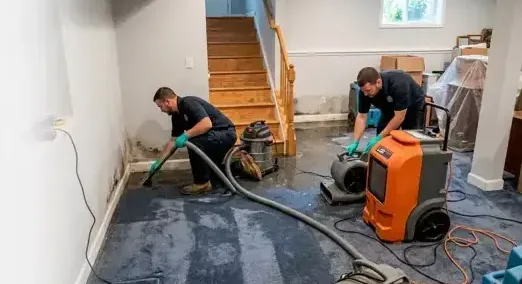
First steps for water extraction and removal in Hickory
- Make it safe The team finds the source, confirms the water has stopped rising and checks for electrical hazards before stepping in.
- Pump and extract Submersible pumps clear deep water, then extractors work across carpet, padding and hard flooring.
- Lift what cannot dry Saturated padding and loose trim come out so the subfloor can breathe and dry.
- Map the moisture Meters and thermal imaging trace water into walls, and a drying plan follows from the readings.
What does water extraction and removal cost in Hickory, NC?
Extraction is usually the smallest part of the bill. One room caught early commonly runs $1,200 to $3,500, several rooms cost more, and a whole level or contaminated water can reach $25,000 once removal and drying are added.
One room, found early
- Pumping
- Extractor passes
- Short drying run
Several rooms
- Padding removed
- Wall moisture checks
- Extended drying
Whole level or contaminated water
- Contaminated materials removed
- Sanitizing
- Full drying and monitoring
Ranges are typical, not a quote: the category of water, the square footage, the material class and how fast drying started move the number most. For a planning figure, try the water damage cost calculator.
How water extraction and removal is handled, step by step
- NO1
Assess
The source, water type and wet materials are identified before equipment is placed.
- NO2
Extract
Pumps and extractors pull standing water out of floors and padding.
- NO3
Dry
Air movers and dehumidifiers take over once the liquid water is gone.
- NO4
Verify
Readings are logged and compared with dry reference points.
In ZIP code 28601, houses sit beside apartment buildings, so extraction jobs range from one wet bedroom to a flooded ground floor. The goal never changes: get the liquid out before it wicks into drywall and framing.
How the water comes out
Submersible pumps clear deep water efficiently. Weighted extractors then pull water out of carpet and padding that would otherwise hold it for days, and low profile tools lift it from hardwood seams. Padding is usually cut out and discarded, since it soaks up water and dries slowly. Hardwood and engineered flooring get special attention, because cupping starts within days if water stays trapped underneath.
Standing water on the floor? Describe it to an extraction crew and get a plan for pumping, drying and moving belongings out of the way.
(888) 578-4720Call about the waterChecking what the water reached
Once the surface water is out, moisture meters and a thermal camera show where it traveled into walls and under cabinets. Those readings decide where air movers and dehumidifiers go, and whether baseboards or drywall need to be opened first. Photos and a moisture map are saved for the insurance file.
When extraction is only the start
Sewage and river water change the plan, because contaminated materials are removed instead of dried in place. Storm and river flood cleanup covers those losses, and slow or hidden leaks usually add structural drying to the job. Apartment and rental losses often involve a landlord, so the team documents each affected unit separately.
Water extraction and removal across Hickory and nearby communities
Water extraction crews work across the whole city, from single family houses to apartment buildings, including the Oakwood Historic District and Kenworth Historic District, the Hickory Southwest Downtown district and the nearby communities of Bethlehem, Mountain View and St. Stephens.
The same service nearby: water extraction and removal in Lincolnton, Conover, Newton.
Related water damage services in Hickory
Water Extraction and Removal questions in Hickory, NC
How soon should water extraction start?
As soon as the work area is safe, because water keeps moving into drywall, padding and subfloor while it stands. Mold can begin within 24 to 48 hours, so early extraction also shortens the drying job.
Can carpet and padding be saved?
Carpet can often be dried in place when the water is clean and extraction starts early. Padding is usually removed, and any carpet or padding touched by sewage or river water is discarded.
Does extraction include drying?
Extraction removes the liquid. Drying is the next phase, where air movers and dehumidifiers pull out moisture that soaked into framing and subfloor, and it is scoped and monitored on its own.
What if the water came from a neighbor's unit?
The extraction is the same, but the source has to be stopped and documented first. A tenant should tell the landlord in writing and keep photos, since the landlord and the insurers may sort out who pays.
Can homeowners extract water themselves?
A wet vacuum handles a small spill. Anything wider than a few feet, or any water that spread into walls, needs commercial extractors and moisture readings, because a dry surface can hide wet framing.
What water is too dirty to extract and dry?
Sewage and river water are contaminated, so affected carpet, padding and drywall are removed rather than dried. Water from a washing machine or dishwasher falls in between and calls for cleaning and a closer look at what it touched.
Get the water out first
Every hour that water sits, it moves deeper into the structure. The crew starts with pumps and extractors, then sets drying equipment.
- Lincoln County, NC
- Open every hour, every day