Water Extraction and Removal in Newton, NC
The November 12, 2020 flash flood emergency came after 3 to 5 inches of rain and brought flooded roads across the county. Indoors, standing water spreads just as fast, so extraction starts before it reaches the subfloor.
(888) 578-4720Call about standing water now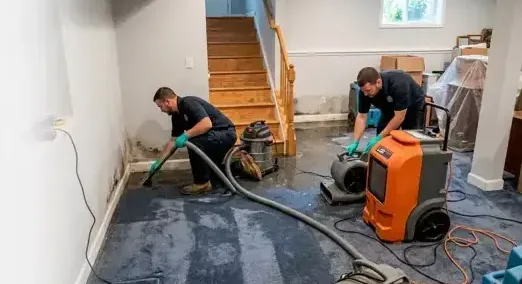
First steps for water extraction and removal in Newton
- Find the water The extraction crew checks every room and level for standing water and marks the wet edges.
- Pump the depth Submersible pumps clear anything deep enough to cover a floor and send it away from the house.
- Extract the rest Wand extractors lift water from carpet, pad and hard floors, and soaked pad is cut out.
- Hand off to drying Moisture readings decide where air movers and dehumidifiers go next.
What does water extraction and removal cost in Newton, NC?
Water extraction for one room caught early runs about $1,200 to $3,500, while several wet rooms reach $3,500 to $9,000. A whole level or Category 3 water moves the range to $9,000 to $25,000, because removal and sanitizing are added.
One room, caught early
- Pump and extractor
- Soaked pad removed
- Readings logged
Several rooms
- Longer extraction
- Flooring checked
- Equipment on each room
Whole level or Category 3
- Contaminated material hauled
- Surfaces sanitized
- Extended monitoring
Ranges are typical, not a quote: the category of water, the square footage, the material class and how fast drying started move the number most. For a planning figure, try the water damage cost calculator.
How water extraction and removal is handled, step by step
- NO1
Locate
Walk each level and mark every wet edge and low spot.
- NO2
Pump
Clear deep water first with submersible pumps.
- NO3
Extract
Pull the remaining water from carpet, pad and hard floors.
- NO4
Verify
Take readings to confirm the surface water is gone.
Extraction is the first physical step in almost every water loss, because each hour of standing water pushes moisture deeper into carpet pad, drywall and framing. Structural drying follows once the bulk water is gone.
How the water comes out
Submersible pumps clear deep water first, then wand extractors pull what the carpet and pad still hold. Furniture is blocked up or moved, and anything that cannot be dried, such as soaked pad, is cut out and carried away so it stops feeding moisture back into the room, and the crew works from the lowest point outward.
Water standing on a floor keeps moving into the materials beneath it, and a call now starts the extraction.
(888) 578-4720Call about pumping a flooded floorWhen the water is not clean
Clean supply water is the easiest case, but water from an appliance or a drain carries bacteria and soil. That changes the job: porous materials come out instead of being dried, and the area is cleaned before any equipment is set. The worst case is covered under sewage backup cleanup.
What comes after extraction
Extraction removes the water that can be seen, not the moisture inside walls and floors. Air movers and dehumidifiers finish that work, and readings are taken until the materials match a dry reference. Rain driven losses follow the same order, as described for storm and river flood cleanup.
Water extraction and removal across Newton and nearby communities
Extraction work runs across Newton, from the downtown historic district and the streets around the Catawba County Courthouse to NC 16 and the Startown and Propst Crossroads communities in ZIP code 28658, for homes, shops and offices alike.
The same service nearby: water extraction and removal in Lincolnton, Conover, Hickory.
Related water damage services in Newton
Water Extraction and Removal questions in Newton, NC
How soon should water be extracted?
As soon as it is found. Water moves from the surface into pad, drywall and framing quickly, and mold can start in 24 to 48 hours, so the first goal is getting the standing water out.
Can carpet be saved after extraction?
Often, if the water was clean and the carpet is extracted quickly, because the surface can be dried in place. The pad underneath is usually replaced, and carpet hit by gray or contaminated water is typically removed.
What equipment removes the water?
Submersible pumps handle depth, and wand extractors handle what soaks into carpet and pad. Hard floors are squeegeed and vacuumed, and low spots are checked with a moisture meter. Areas that look dry are verified, because water often hides under baseboards and cabinets.
Does extraction include drying?
Extraction removes standing water. Drying comes next with air movers and dehumidifiers, and the two are priced together on most jobs because one without the other leaves moisture behind.
What if the water came from a storm?
Storm and flood water is treated as contaminated. It is extracted, then affected materials are removed and surfaces cleaned before drying begins.
Standing water does not drain itself
The extraction crew removes the water, lifts what cannot be saved and sets up drying so the rooms can be used again.
- Lincoln County, NC
- Open every hour, every day