
On November 12, 2020, the National Weather Service in Greenville-Spartanburg issued a flash flood emergency for Greater Newton and Conover. Between 3 and 5 inches of rain had fallen in about 20 hours, and emergency management reported numerous flooded roads, water rescues and evacuations across Catawba County. The event shows how quickly ordinary rain can turn into a house problem.
Key takeaways
- The warning came after 3 to 5 inches of rain in about 20 hours, enough to overload drains, gutters and saturated ground.
- The first day follows an order: safety, photos, then removal of the standing water.
- Flood water is Category 3, so soaked carpet, pad and wet drywall are removed and the structure is cleaned and dried.
- Readings taken during drying, not the calendar, decide when the equipment can come out.
- Knowing the shutoffs and keeping photos on file before a warning shortens the recovery.
What the November 2020 warning said
The National Weather Service issued the flash flood emergency for Greater Newton and Conover on November 12, 2020. Emergency management reported numerous flooded roads, water rescues and evacuations across Catawba County.
The warning named the Lyle, Snow and Falling Creek drainages as the most threatened areas. It listed Newton, Startown, Propst, Claremont and Maiden among the places expected to see flash flooding, and it rated the damage threat as catastrophic.
Startown and Propst Crossroads are community names tied to ZIP code 28658 around Newton. No count of damaged houses is cited here, and no claim is made about any one street or neighborhood.
The work that follows an event like this is covered under water damage services in Newton.
What 3 to 5 inches in about 20 hours does to a house
Rain at that rate beats the systems built to carry it away. Gutters overflow, storm drains fill and the ground stops taking in water.
The extra water then looks for the lowest, easiest way into a building.
- Thresholds at doors and garage openings.
- Window wells and low windows.
- Gaps where a slab meets a wall, or cracks in a foundation.
- Crawl space vents, if the house has a crawl space.
- Floor drains that back up when the system outside is full.
The first day after water enters
The days after a flash flood are crowded, and the temptation is to start hauling things out. A short, fixed order of work keeps the loss from growing.
Safety first
Floodwater can hide live wiring, sharp debris and slippery mud. Power to a wet room stays off until an electrician clears it.
- Never walk through water that is moving, even a few inches deep.
- Keep children and pets out of the wet rooms.
- Treat food and drinking water that touched the flood as unsafe.
Photos and notes
Photographs of the water mark on the walls, damaged furniture and the outside of the house record the loss. Dated images are the first thing an insurer asks for.
Removing the water
The crew uses pumps and truck mounted or portable extractors to clear the floor. Where water stands against below grade walls, the level is lowered in stages.
Fast water extraction matters because every extra hour pushes moisture deeper into wood and drywall.
What gets removed and what gets dried
Flood water is Category 3. That label means anything porous that soaked it up is removed instead of dried.
- Carpet, pad and soaked insulation are removed and discarded.
- Drywall and baseboards that wicked water are cut out until the cut edge reads dry.
- Tile, concrete and framing are cleaned, treated and dried in place.
- Furniture and belongings are sorted into clean, check and discard piles.
Drying the structure
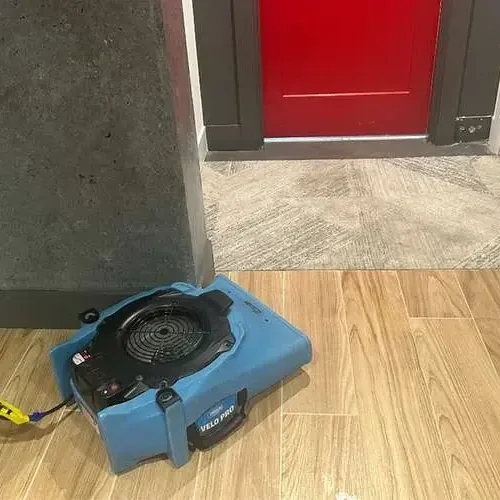
After the debris is out, moisture meters and an infrared camera map the wet areas, including inside walls. Fans and dehumidifiers stay in place and are adjusted at every visit.
The goal is to match a dry reference piece of the same material. The method is explained under structural drying, and the broader process sits under storm and flood cleanup.
Mold can start on wet material within 24 to 48 hours, so drying is set up early and tracked.
Why a flash flood feels different from a slow rise
A river that climbs over a day gives families time to move belongings. A flash flood does not.
Water can reach a doorway while the rain is still falling, and roads can close before anyone has left. That pace is why the first minutes inside a house are about safety and not about saving objects.
It also explains why the damage can look uneven. One room may stay dry while the next has water over the floor, depending on where the water found its way in.
Mud and silt: why the cleanup goes beyond water
Fast water carries soil. When it drains away, it leaves a film of silt on floors, in cabinets and inside wall cavities.
That silt is part of the Category 3 problem, because it holds whatever the water carried. It is shoveled and washed out before the drying equipment is set, since drying over a layer of silt traps moisture beneath it.
A room by room look at what the crew checks
The crew works through the house in order, using readings to decide what is removed and what stays.
Kitchen and laundry
Cabinet bases, toe kicks and the floor under the appliances are checked first. Dishwasher and washer connections are inspected because they sit low.
Bedrooms and living areas
Carpet, pad and the bottom of the drywall are the first things to come out. Furniture legs are lifted and wrapped so wet floors can be cleaned and dried.
Garage and utility spaces
A water heater, furnace or electrical panel that sat in water needs inspection before it is turned on. Concrete floors are cleaned and dried but the equipment on them is a separate safety question.
Getting ready before the next warning
A flash flood leaves little time to prepare, so the best work happens beforehand. A few habits make the first day easier.
- Learn where the main water shutoff and the electrical panel are.
- Photograph each room and keep an inventory of valuables somewhere other than the house.
- Keep important papers and electronics up off the floor.
- Know the route out of the neighborhood if a road floods.
- Keep the insurance policy, including any flood coverage, where it can be found quickly.
Insurance after a flash flood
Many standard homeowners policies leave out rising water, and flood coverage is usually a separate policy. The cause of the water decides which policy applies, so the agent is the one to ask.
Moisture logs, equipment records and receipts from the drying work belong in the same folder as the photos.
Questions
Is flood water from a storm the same as water from a broken pipe?
No. Storm and creek water is Category 3 because of what it carries, while a fresh supply pipe leak usually starts as clean water.
Should carpet be pulled after a flash flood?
Usually yes. Carpet and pad that soaked up flood water are removed, though hard flooring may be saved if the readings allow.
How soon should drying start?
As soon as the standing water is gone. Wood and drywall keep absorbing moisture, and mold can begin within 24 to 48 hours.
Does the warning area decide which houses were damaged?
No. A warning describes the risk for a wide area, while damage depends on the individual house, its position and how the water reached it.
What should be photographed before cleanup?
The water mark on the walls, damaged furniture, the outside of the house and every wet room. Dated photos support the claim.
Is the warning area the same as the damage area?
No. A warning covers a wide area and a range of risk, while actual damage depends on each property.