Structural Drying and Dehumidification in Conover, NC
Water that has been pumped out still leaves moisture inside framing, subfloor and drywall. The crew sets air movers and dehumidifiers from moisture readings and keeps them running until the structure reaches its dry goal.
(888) 578-4720Start the drying plan in Conover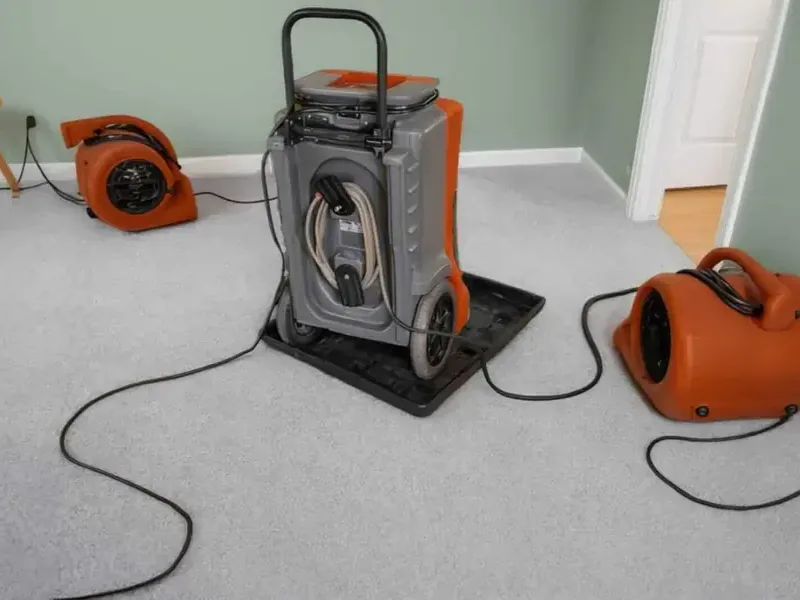
First steps for structural drying and dehumidification in Conover
- Open the room Remove rugs and open closet doors so air reaches every wet surface.
- Leave equipment alone Do not move or switch off drying equipment placed from readings.
- Keep doors closed Closed doors keep the dehumidifiers working on the wet space only.
- Log the visits Note each visit and any equipment that stops running.
What does structural drying and dehumidification cost in Conover, NC?
Drying cost follows the materials involved and the number of days equipment has to run, because dense framing and hardwood take longer than carpet and drywall. The ranges below are typical, and the daily readings decide the final length.
One room, Class 1 or 2
- Equipment set from readings
- Daily moisture checks
- Final dry confirmation
Floor level or Class 3
- Several rooms of equipment
- Wall cavities dried
- Longer drying period
Class 4 materials
- Hardwood and concrete dried
- Specialty drying mats
- Extended monitoring
Ranges are typical, not a quote: the category of water, the square footage, the material class and how fast drying started move the number most. For a planning figure, try the water damage cost calculator.
How structural drying and dehumidification is handled, step by step
- NO1
Measure
Moisture is read and mapped on every affected material.
- NO2
Place
Equipment is positioned from the readings.
- NO3
Monitor
Readings are taken daily and the setup is adjusted.
- NO4
Release
Equipment is removed once every material meets its goal.
Extraction removes the water you can see. Drying removes the water you cannot, the moisture locked in wood, drywall and concrete that keeps damaging the building long after the puddles are gone.
How drying equipment works
Air movers push dry air across wet surfaces so water evaporates, and dehumidifiers pull that vapor out of the room and drain it away. The two have to work together, since fans alone only move humid air from one spot to another. Wall cavities and floor mats get their own drying setups.
Building still wet after the water is out? Call now, any hour, and the crew plans the equipment, the readings and the schedule.
(888) 578-4720Ask for a drying planThe readings decide when it ends
A moisture meter reading is taken on each material at the start, then every day, and compared with a dry reference from an unaffected area. Equipment stays and moves until the numbers match, and not before, because wood and drywall can feel dry while still damp inside.
When drying follows a flood
On November 12, 2020 creek driven rain brought flooding to the Conover area, and that kind of event leaves structures wet well after the water recedes. Work after a flood or pipe break begins with water extraction and often includes storm and river flood cleanup.
Structural drying and dehumidification across Conover and nearby communities
Structural drying runs wherever water has soaked a building in Conover, from the neighborhoods around Lecho Park to downtown and the Bolick Historic District, and the creek driven rain of November 12, 2020 is the local reminder of how wet a structure can get.
The same service nearby: structural drying and dehumidification in Lincolnton, Newton, Hickory.
Related water damage services in Conover
Structural Drying and Dehumidification questions in Conover, NC
How long does structural drying take?
Most jobs take several days, though dense materials such as hardwood or plaster can need longer. The daily readings decide the end date, not a calendar estimate.
Is the drying equipment loud and power hungry?
It runs continuously, so some noise and extra electricity use are normal while the structure dries. Units are placed to do the most work with the fewest machines.
Can I run the air conditioning during drying?
Usually the crew sets how the system should run, because heat speeds evaporation and the dehumidifiers work best in a closed space. Follow the crew's instructions for each room.
What do the water damage classes mean?
Class 1 is minimal moisture in low absorbing materials, Class 2 is a whole room of wet carpet and walls, Class 3 is water from above, and Class 4 is deeply held moisture in dense materials.
How do I know the structure is actually dry?
Each material reaches the dry reference reading taken from an unaffected area, and the final readings are recorded before equipment leaves. Touch alone is not enough to tell.
Finish the job with proper drying
Moisture left in framing and subfloor keeps causing damage after the puddles are gone. Describe what was wet and when, and the crew sets the readings and equipment.
- Lincoln County, NC
- Open every hour, every day